
What was life like for primary-aged children during the height of the Industrial Revolution?
The Rise of Paisley and Industrial Factories
During the Victorian era, Paisley was world-famous for its textile industry. Local weavers excelled at recreating intricate patterns from Indian cashmere shaws—giving birth to the iconic “Paisley pattern.”
By 1850, Paisley boasted over 7,000 weavers working alongside thousands of children:
- Cottage Industry: Before big factories, weaving happened at home. Girls carded wool and wound bobbins, while young boys (known as draw boys, some as young as six) stood on elevated platforms for hours pulling threads to help create complex patterns.
- The Factory System: By the 1860s, hand looms gave way to industrial factories housing huge power looms. There were over 71 shaw manufacturers and several massive thread mills operating in Paisley.
Dangerous Work for Little Hands
In the giant thread mills, children were employed because they could be paid low wages and were small enough to navigate tight spaces around heavy machinery.
- The Job of a “Piecer”: Children worked as piecers, leaning over moving spinning machines to catch and twist broken threads together—a job that led to frequent and severe accidents.
- Health Hazards: The mill air was thick with airborne dust and fibers, leading to chronic lung conditions like bronchitis. The non-stop roar of industrial looms also caused widespread hearing loss among young workers.
The 1872 Education Act and “Half-Timers”
The passage of the 1872 Education Act made schooling compulsory in Scotland for children aged 5 to 13. However, factory owners were reluctant to lose their cheapest workers.
In response, local mill owners established the Fergusley Half-Timer School, which accommodated 400 girls using a split-day system. Pupils spent half their day studying in the classroom and the other half working long shifts in the mill. While exhausting, compulsory schooling was gradually extended, eventually bringing child labour in Scotland to an end. By 1904, the Fergusley Half-Timer School was transferred to the local school board as a standard school.
Primary School History & Literacy Activity: Half-Timer Comic Strip
Task: A Day in the Life of a Half-Timer
- Perspective: Imagine you are a child attending a Victorian half-timer school.
- The Routine: Map out your day split between morning lessons and an afternoon shift at the thread mill (or vice versa).
- Emotions & Thoughts: Describe how exhausting it feels to balance schoolwork with dangerous physical labour.
- Illustration: Draw comic panels depicting the noisy mill, the classroom, and your daily routine.
About the author
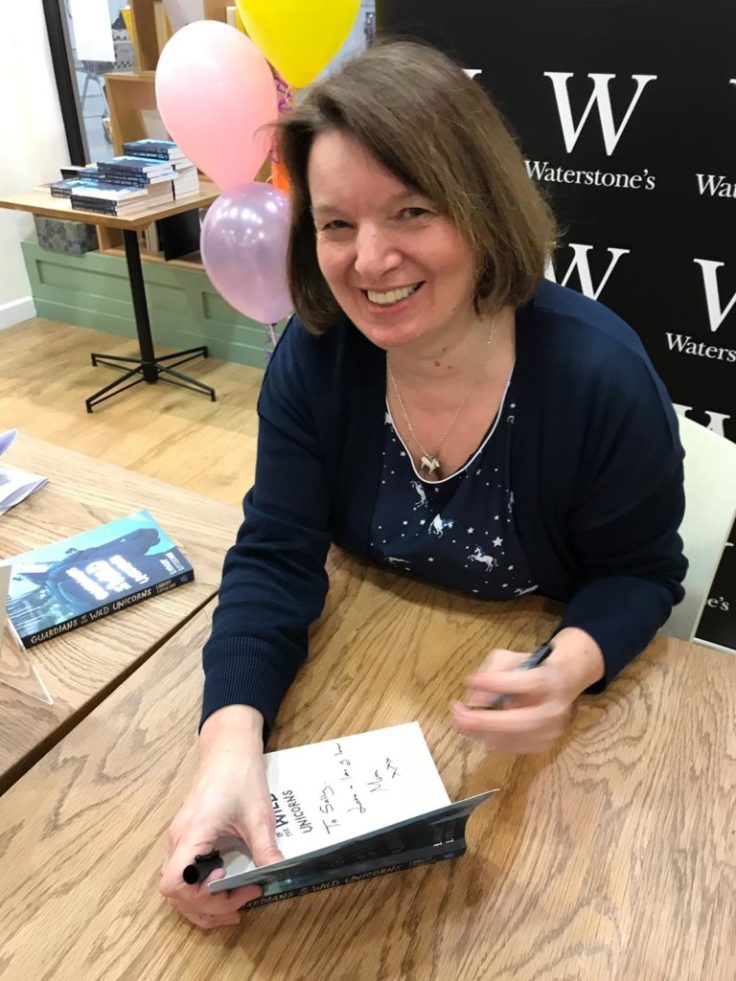
Lindsay Littleson (https://lindsaylittleson.co.uk/) has four grown-up children and lives in the village of Uplawmoor near Glasgow. She was a full-time primary teacher for many years but took early retirement in 2019 to focus on her writing. Before becoming a teacher she spent eight years as possibly the worst PAYE auditor ever to be employed by the Inland Revenue.
In 2014 she began writing for children and won the Kelpies Prize for her first children’s novel The Mixed Up Summer of Lily McLean. The sequel, The Awkward Autumn of Lily McLean, was published by Floris Books in 2017 and Guardians of the Wild Unicorns came out in 2019. Guardians of the Wild Unicorns was nominated for the Carnegie Medal and shortlisted for both the Stockton Children’s Book Prize and East Sussex Children’s Book Prize. Secrets of the Last Merfolk was published by Floris in 2021.
In 2015 her WW1 novel Shell Hole was shortlisted for the Dundee Great War Children’s Book Prize and she enjoyed engaging in research so much that she was inspired to write another two historical books, A Pattern of Secrets, set in Victorian Paisley and The Titanic Detective Agency.
Her latest novels with Cranachan Books are The Rewilders, which was long listed for the 2022 SPARK! School Book Award and Euro Spies which came out in 2023. Ice Cream Boy is her latest novel. It came out with Floris Books in May 2024.
About the book
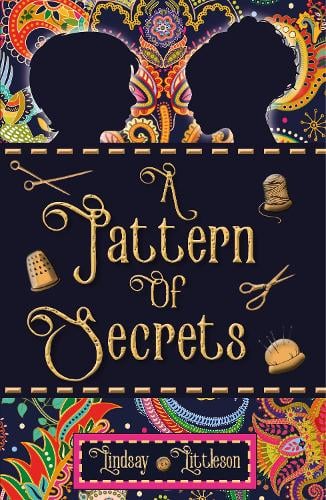
The worlds of rich and poor collide in this gripping Victorian adventure as Jim and Jessie unravel the past and its pattern of secrets…
Paisley 1876. 12 year old Jim has escaped from the Poorhouse and now he must save his little brother from the same fate.
His only hope lies in a mysterious family heirloom—a Paisley patterned shawl that has five guineas sewn into its hem—the price of freedom. Jim must find the shawl and break into the big house to steal it back. But the girl with the dark hair is always watching…
‘A tapestry of kinship, loss and compassion with poignant resonances for today.’
Robert J. Harris

